Understanding Herbal Preparations: Salve
Posted by TriLight Health on Jun 26th 2026
Warmer days and more time outside have arrived. This is a welcome change for most of us. It also means bug bites, sunburn, stings, cuts, etc. As we work together to understand various herbal preparations, an herbal salve is perfect for this time of year.
This unique herbal preparation is only found in one of our products- Soothing Salve. Salves are more closely related to a poultice than any other preparation we’ve studied so far. Both are topical and first aid treatments. Herbalists often have different types on hand to use after a poultice.
What is a Salve?
The word "salve" could also be replaced with "ointment" or "cream". These may include oils, wax, and herbs. They are used on the skin and occasionally inside the mouth.
They can be used at home in place of other ointments for wounds and creams for sore muscles/joints. One of the key features of this type of herbal preparation is its thickness. Salves won’t be drippy like lotions, but are designed to apply quickly and soak into the skin for ultimate healing benefits.
How to make an herbal salve-
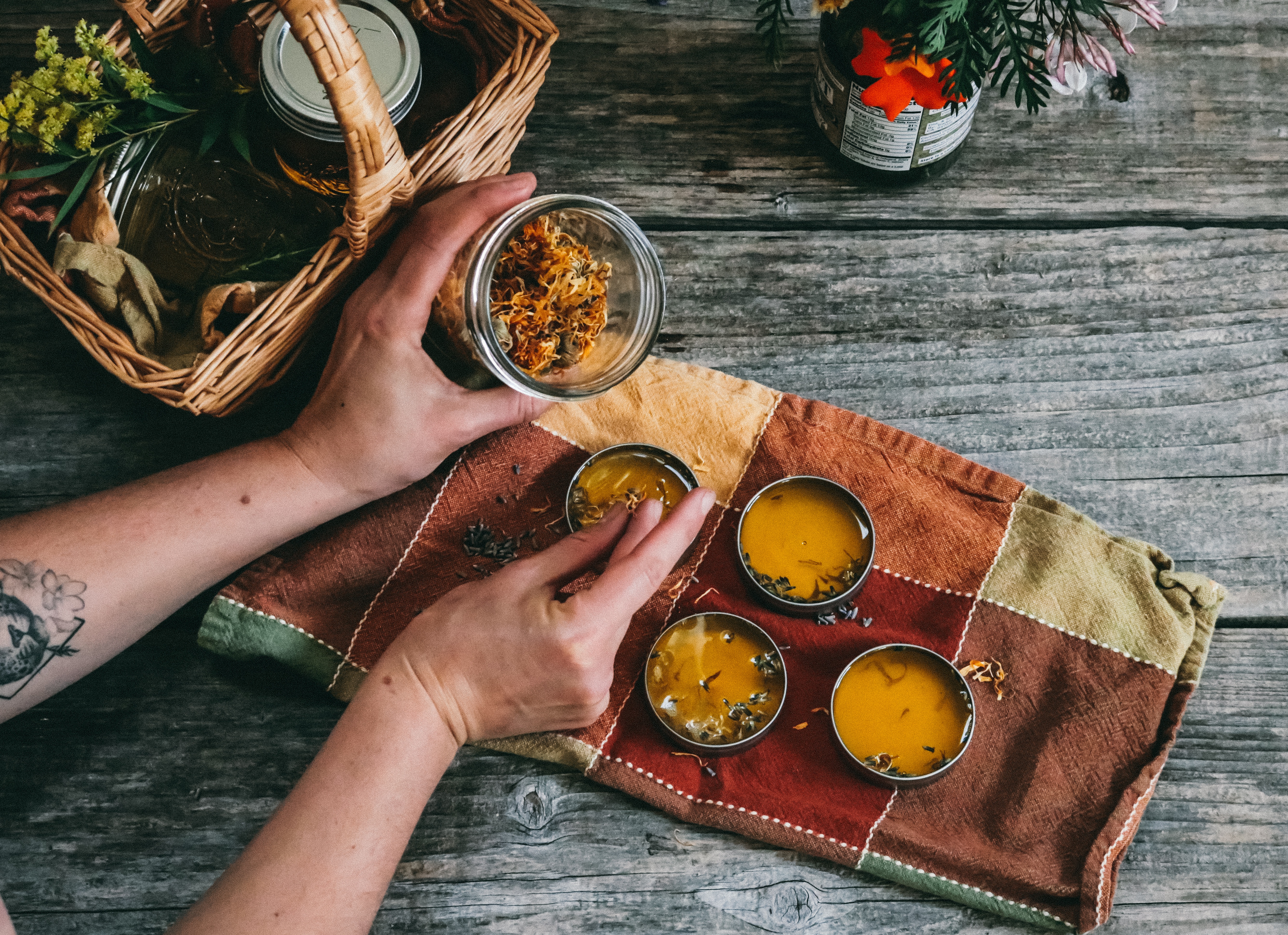
An herb-infused oil or glycerite is first created. This will be made with herbs selected for the specific skin condition or with multi-purpose herbs to make a more all-purpose salve.
After straining the herbs, the oil or glycerine is then mixed with other ingredients. This might include other types of oils, essential oils, hydrosols, or a thickening agent. Typically, salves are thickened with beeswax as well (Soothing Salve is a vegan formula; beeswax is not used).
What is an herbal salve made of?
These are the most commonly used herbs:
- Arnica
- Calendula
- Charcoal (not an herb but worth a mention)
- Comfrey
- Jewelweed
- Lavender
- Meadowsweet
- Plaintain
- Pine
- St. John's Wort
- Yarrow
How is a Salve Used?
Salves are applied directly to the skin. Often, a Q-tip or a small scoop is used to prevent direct contact with the affected area. The area can then be covered with a bandage or gauze if desired.
Traditional uses include:
- Acne
- Bites
- Burns
- Cuts
- Eczema
- Rash
- Sunburns
- Scrapes
- Stings
- And more!
What is the difference between a poultice and a salve?
A poultice is made of fresh herbs that are kept moist on the skin for a short period of time- usually 15-20 minutes. It is most often used for immediate relief and/or a drawing action. A salve is used as a protective or healing barrier that will remain on the skin for hours until fully absorbed.
Why are salves only used topically?
Herbalists use salves on nearly all topical ailments. They are used only topically because they are designed to treat a topical ailment. You wouldn't swallow a gauze if you had a cut; you'd place the gauze over the cut. The same logic applies to a salve. It's only going to be effective topically. Remember, your skin is a barrier to protect your muscles, blood vessels, and vital organs. Anything you apply to your skin can penetrate that barrier and help with a number of conditions.
Additionally, some of the herbs used in salves- such as comfrey- are not typically consumed internally. Herbalists may suggest complementary herbal teas, tinctures, or other internal preparations alongside a salve.
A salve is an easy starting point for a holistic 1st aid kit and medicine chest. They're used in a similar way to any other topical chemical-based ointment or cream you're used to using.
How does TriLight Health use salves?
We offer Soothing Salve. It contains essential oils and herbs to help deeply nourish, support, and soothe a wide range of topical concerns. Plus, it's safe for the family (ages 3+) and only a few drops are needed at a time. This is an especially popular herbal salve for bug bites and 1st aid concerns. Several TriLight families tell us it's the only topical product in their medicine chests because it's so versatile!
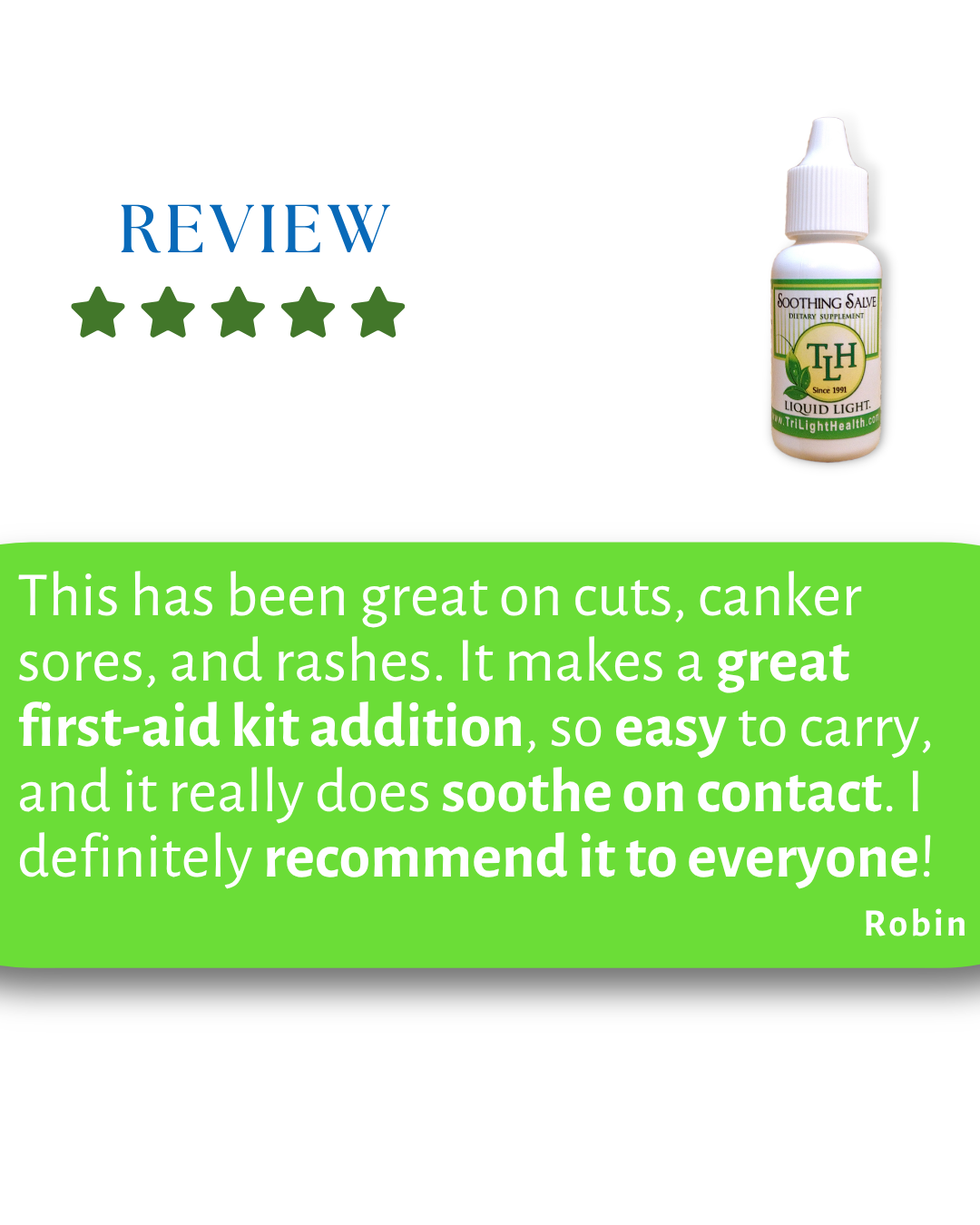
No mess. No prep. Ready for you when you need it. Only a few drops are needed at a time, so one bottle lasts a long time.

Soothing Salve- A Must-Have for Spring & Summer
Herb of the Day: Comfrey - A Natural First Aid Herb
FAQ: Which formulas contain essential oils?