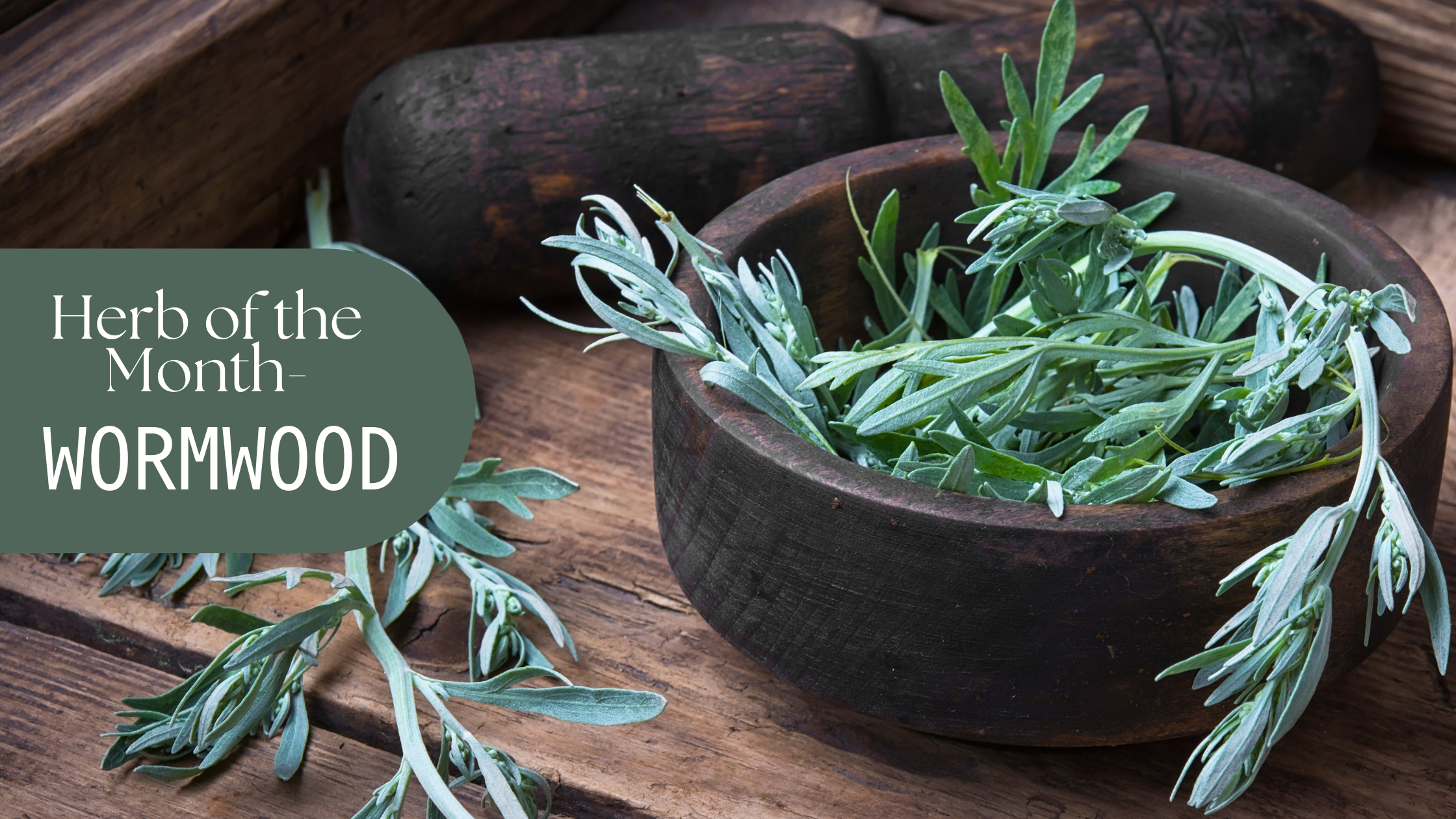
Herb of the Month: Wormwood
Posted by TriLight Health on Jan 24th 2026
Wormwood is one of those special herbs that gives us hints with its name. This unique and extremely bitter herb is most often associated with worms/parasites. Most often known for roundworm and pinworm.
It has a wide history of usage in ancient cultures around the world. You'll even find it referenced in the Bible. When mixed with fennel and anise, it makes the alcoholic beverage absinthe. Herbalists most often use the dried leaves in a variety of preparations.
History of Wormwood
Wormwood occurs several times in the Bible. It is mentioned both as a bitter plant/herb and as the name of a star in the book of Revelation. We find references to it in Ancient Egypt as far back as 1550 BC.
It is found in ancient Eastern Medicine texts dating back centuries. Traditional Chinese Medicine highly values this plant. We see it referenced throughout Asia and into northern Africa in historical texts.
Our Worm Out formula comes from Cherokee herbal medicine. Wormwood is one of the last ingredients in this blend, passed down to us by 7th-generation healer, Medicine Bear.
Absinthe dates back to the 18th century in France. It was initially used medicinally and is now used both medicinally and recreationally. This drink has a rather storied history of bans, changes, and drama throughout the ages.
Modern Western/American herbalists didn't begin using this herb much until the mid-1900s. It is still not widely used by herbalists because it can be a difficult herb to work with. This is often considered an "advanced" herb, both for its intense flavor and powerful effects.
Traditional Herbal Uses of Wormwood
Artemisia absinthium
- Antioxidant
- Digestion
- Inflammation
- Lymphatic system
- Malaria
- Parasites
- And more
There is ongoing research on Wormwood for cancer that looks quite interesting.
This is one herb best not to tinker with on your own. It can be challenging to get the ratios right, and too much can cause problems. Work with a well-prepared remedy or a trusted herbalist, and consult a doctor before using Wormwood.
Note- Always discuss with your doctor before trying something new. Those with seizure disorders, kidney problems, and liver problems will most likely be told to avoid Wormwood. Avoid during pregnancy. It should only be used in small doses and for short periods of time. Those with ragweed/asteraceae allergies may not tolerate Wormwood, as it is in the same family. Some are ok with it; start in extremely low amounts.
Wormwood in Literature and Culture
C.S. Lewis gives Wormwood its most famous literary reference. In his book Screwtape Letters, the demon nephew receiving lessons is named Wormwood. This is a particularly interesting name to choose, as it draws parallels between the bitter, often intense action of Wormwood and the actions and influence of demons.
In the book, Emily's Quest, L.M. Montgomery writes, "Some nights are like honey — and some like wine — and some like Wormwood." Thus reminding the reader that some nights are sweet and you long to savor them. Others are strong and may feel intoxicating. While others are bitter, hard, and difficult.
William Blake references Wormwood in his poetry. We also find references in ancient Roman texts by writers such as Ovid and Lucretius. In Nightmare Before Christmas, Sally makes a drink including Worm Wort, which many believe is a reference to Wormwood.
In 2017, there was even a miniseries titled Wormwood! Wikipedia says, " Wormwood is told through Eric Olson, the son of Frank Olson, an American biological warfare scientist and Central Intelligence Agency (CIA) employee, who died under mysterious circumstances in 1953." The Wikipedia article also has some interesting insight into why this was a fitting name for the series; check it out here.
Lore About Wormwood
- VanGough was addicted to absinthe, and it is said the potent properties of Wormwood- particularly the thujone- may have led to his insanity.
- In ancient Europe, it was hung in doorways on Halloween to ward off evil spirits.
- Some believe it opens up a different mental/spiritual level of awareness
How do herbalists use Wormwood?
Because of the extremely bitter flavor and strong properties, minimal amounts are used. By minimal amounts, sometimes only a tiny pinch or a drop of a tincture. A little goes a VERY long way with this herb! It can be pretty hard on the body, especially the gut, if used in large amounts.
The entire plant is used, most often dried. It doesn't taste or smell very pleasant, so you'll find it mixed with synergistic herbs that have a better flavor. Herbalists frequently make it into capsules to avoid having to taste it! Though some herbalists use it as a tea, this seems more common in Europe than in the US. It is often used before meals to stimulate digestion- usually only a drop or two of a tincture or a very weak tea is used.
How Wormwood is harvested- There is some debate here. Some herbalsists say to harvest just before blooming, while others say to harvest at peak bloom. Most agree to harvest in the morning and to wear gloves. The leaves are then dried gently.
How we use it-
We use it in Worm Out & our Parasite Cleanse Wellness Kit, January's Specials of the Month.
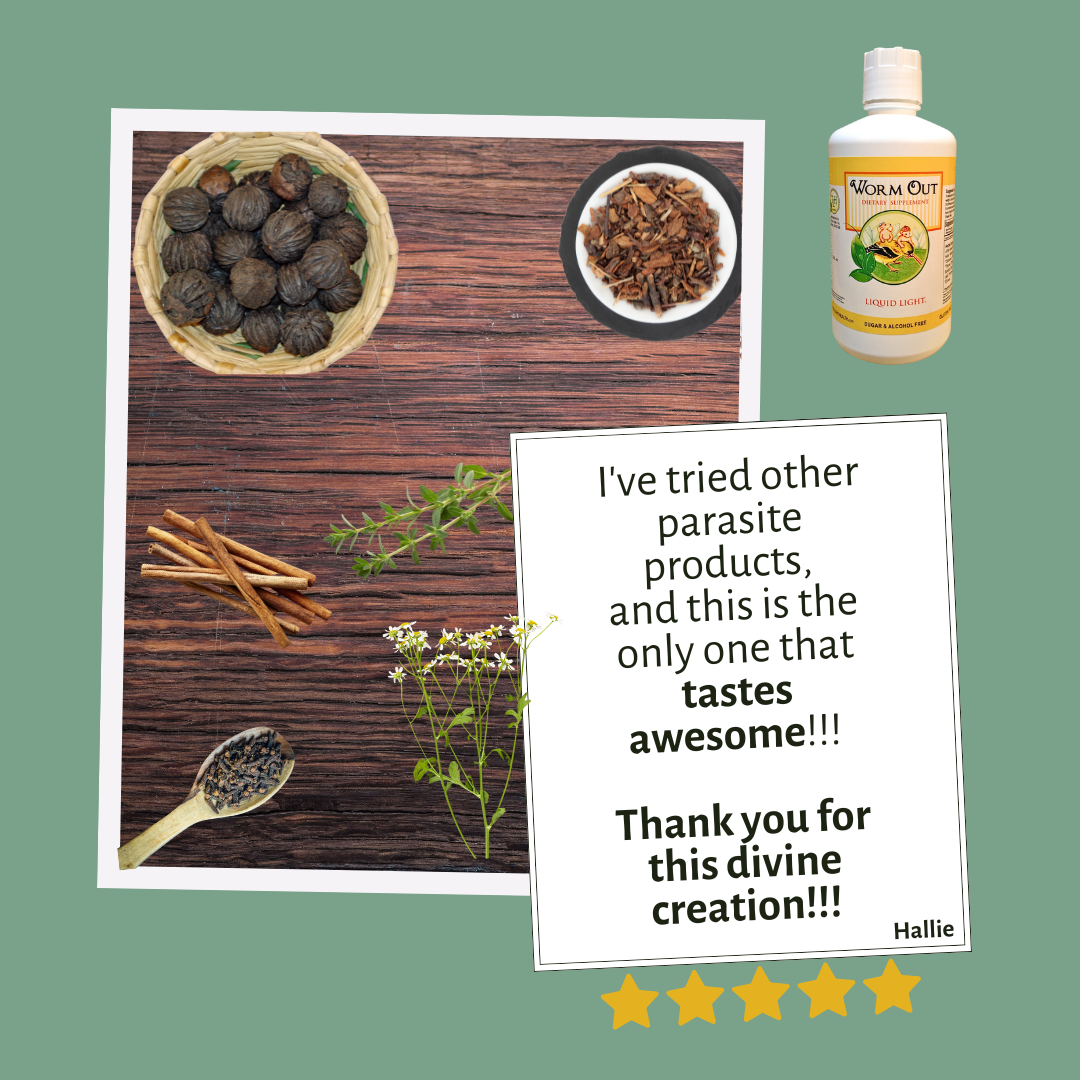
- Worm Out has been one of our best sellers for over 30 years. It is our gentle herbal blend for parasite detox and digestion support. It contains- Black Walnut Hulls, Wintergreen, *Cinnamon, Pau d'Arco, Thyme, *Chamomile, Burdock, *Catnip, *Wormwood, and *Cloves in a base of Kosher Vegetable Glycerine and Reverse Osmosis Water. *Ingredients are Certified Organic.
- We combine Worm Out with garlic and probiotics into our Parasite Cleanse Wellness Kit.
Both are 10% off for January 2026.
- One customer will get their order FREE! We'll be reimbursing a random order of Worm Out this month -
No coupon code needed, add them to your cart.
Learn More-
Herb of the Day: Black Walnut
Herbal Parasite Cleanse
Understanding Herbal Use: Cherokee Medicine