Herb of the Day: Comfrey - A Natural First Aid Herb
Posted by TriLight Health on Jun 20th 2026
Comfrey, Symphytum officinale, is an excellent herb to know about this time of year. It’s one of the top first-aid herbs and has been used for thousands of years. Today we'll discuss the use of the leaf. Some herbalists also use the root; its properties are similar to those of the leaf. Internal use is debated and generally not recommended. Comfrey leaf is used topically in salves, balms, washes, creams, and other ointments.
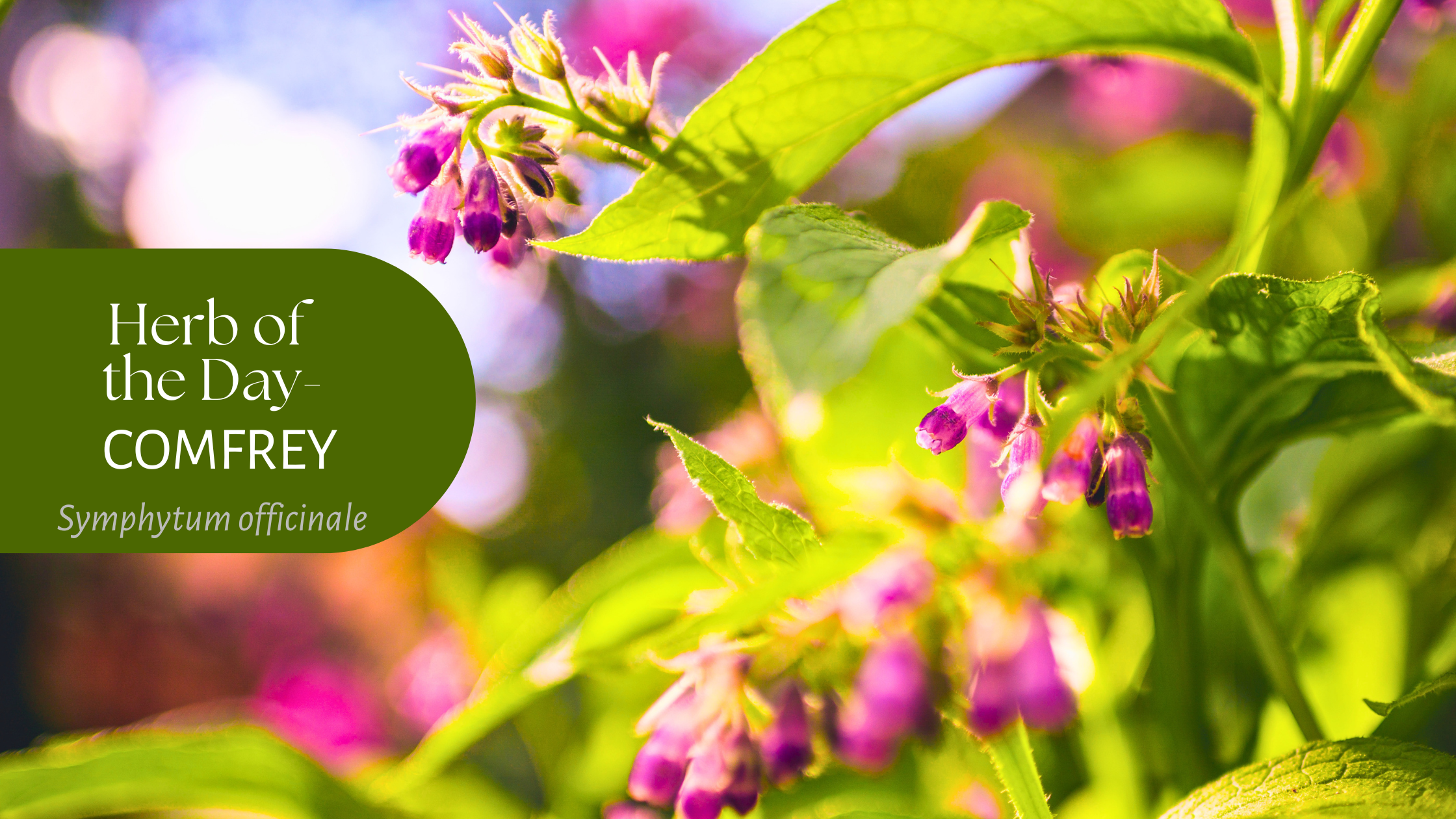
Traditional Herbalism Uses for Comfrey
- Bruises
- Cuts
- Pain
- Poison Ivy
- Rashes
- Wounds
Q- Can you take Comfrey internally?
A- No. Comfrey is only recommended for topical use. Internal use of Comfrey has been debated and may have a connection to liver damage and cancer. In fact, in 2001, the FDA banned all products containing Comfrey for internal use. Some herbalists continue to use it internally, primarily for broken bones that are not healing properly. We do not recommend internal use.
Q- Is Comfrey a good fertilizer?
A- Yes! Many gardeners absolutely love Comfrey for its benefits as a garden fertilizer. It helps to mine nutrients from the soil. Farmers will mix it into compost to boost nitrogen levels, add it to planting material or mulch, or plant it alongside other plants to improve nutrient levels. Comfrey is easy to grow and grows quite rapidly. It’s a sterile plant, which means it can only be grown by root division. Once it is established, it is easy to maintain.
The leaves are covered in hair, and it’s best to wear gloves when picking Comfrey. It can be harvested a few times a year and is relatively easy to maintain, adding value to the home garden.
Q- Is there a comfrey essential oil?
A- Not really. Comfrey doesn't distill into an essential oil like other herbs do. If you find "comfrey oil" for sale, it will be the oil blended with or infused into something like olive oil.
Q- How to use comfrey topically?
A- This is such a versatile herb for topical preparations. It can be blended or infused with glycerine or oil and rubbed into the skin. This form is most often used for minor cuts, burns, rashes, and wounds. The oil can then be made into a salve if desired. A comfrey poultice is commonly used for torn ligaments, bruises, and sprains. Herbalists might also use liquid topically after brewing the leaves.
Comfrey and TriLight Health
We use Comfrey in our Soothing Salve. This is our popular topical salve that’s all-purpose for cuts, rashes, skin irritation, and more. It’s a must-have for summertime and for any first-aid kit.
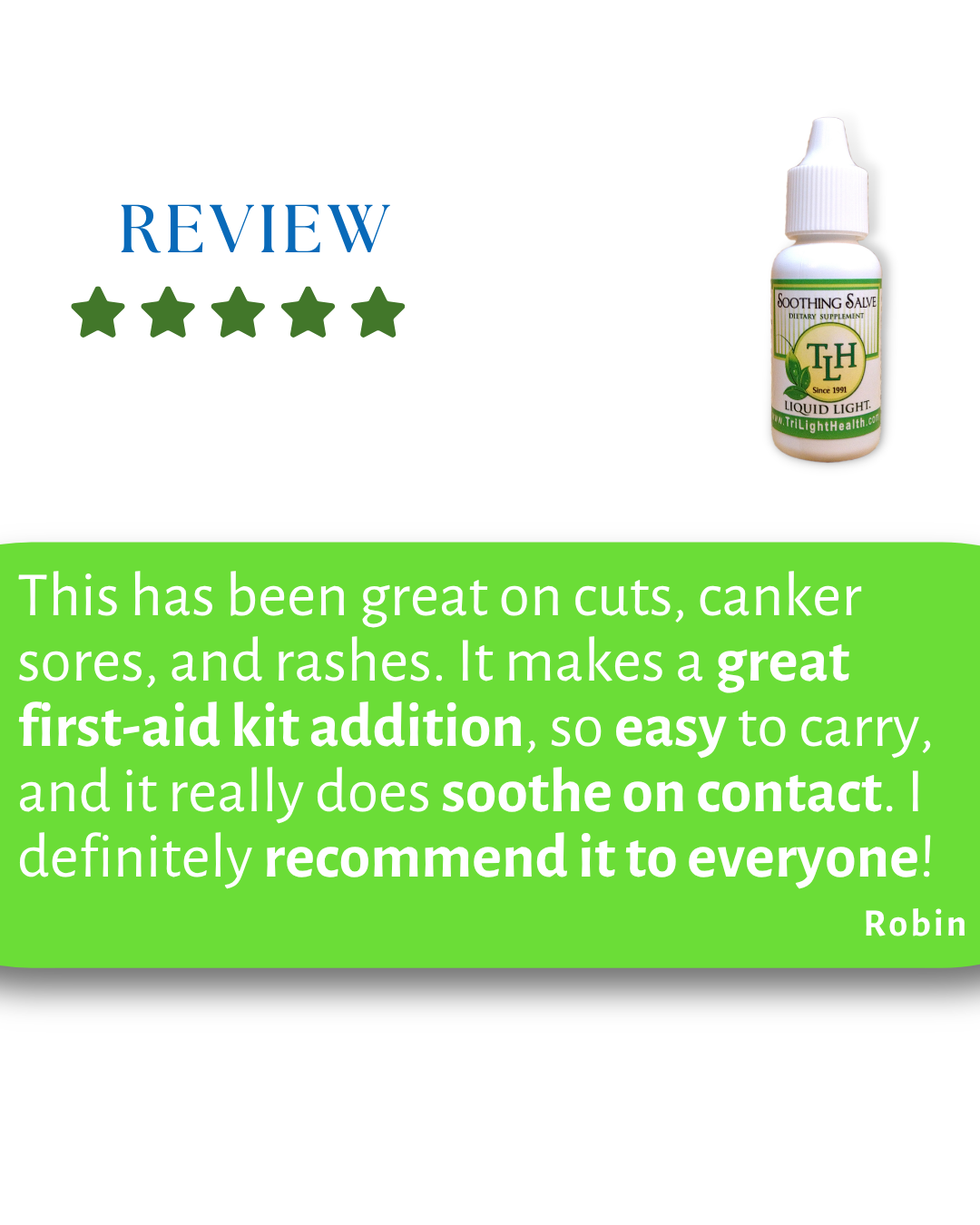
Here’s What Our Customers Have to Say About Soothing Salve:
“Not only does this stuff work well in soothing cuts, scrapes, and rashes, but it also smells wonderful! My kids ask for it every time they need a bandaid.” Rebecca
“Burned a finger cooking; put this on and though at first things stung more, soon my finger was almost completely normal (...except for the smooth skin I wouldn't remember I had burned it).” MommyMe
“We LOVE Soothing Salve! It really does soothe; we use it on all cuts, scratches, burns, cold sores, rashes, bites, etc. The kids request it for any injury. Definitely a must-have!” mrt
“I love this product! I have used various natural and herbal salves over the years and none have worked as well as this one.” Erin
You can get your own bottle of Soothing Salve for only $9.95. It’s a small, TSA-approved-sized bottle you can easily toss into your diaper bag or purse. This is a product our customers are never without! Save 10% on Soothing Salve until 6/30/26 + save an extra 20% with code Summer26 until 6/25!

Learn More
Fast Facts About Soothing Salve
Understanding Herbal Preparations: Salve
Essential Oil of the Month: Camphor