Understanding Herbal Preparations- Infused Oil
Posted by TriLight Health on Sep 27th 2019
Next up in our herbal preparations series is one that is not as well-known. The herb-infused oil is most commonly thought of as a culinary preparation. We've all seen infused and flavored olive oils popping up at trendy markets in town and at mall kiosks. These are not what we're talking about. Today, we're taking a look at herbal-infused oils used in herbal medicine.
What is an herb-infused oil?
These may be thought of as infusions or decoctions with oil. In an herb-infused oil, we aim to extract the herbs' medicinal and healing properties for a variety of applications. Like a salve, an infused oil is used topically, unlike an infusion or decoction.
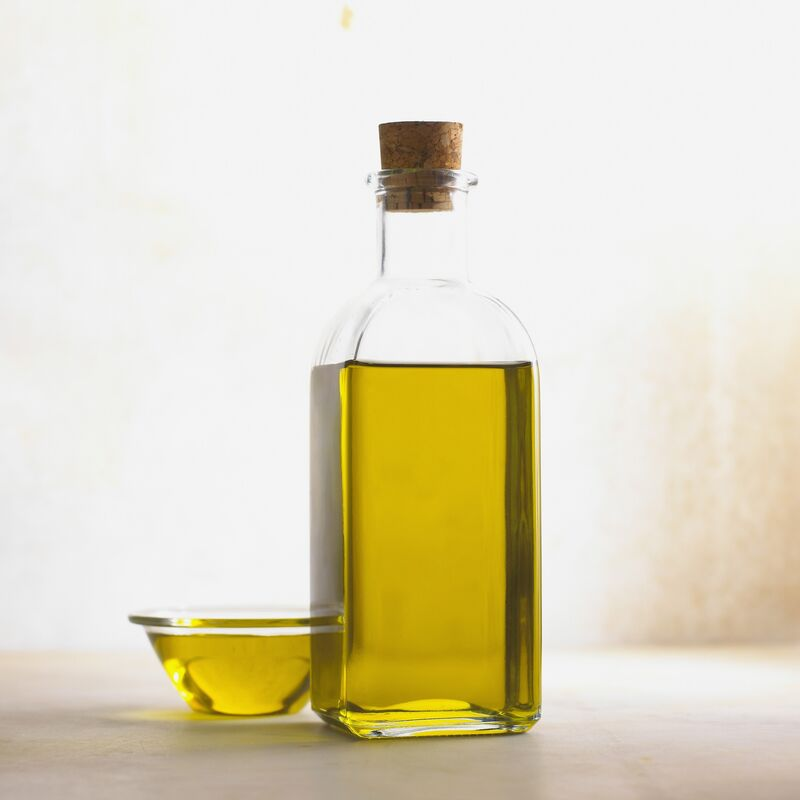
Safflower oil, olive oil, jojoba, or rose seed oil are most often used, though many other oils can be used as well. Herbs are placed in the oil and left there for a set amount of time. This allowed the herb's beneficial properties to meld with the oil.
How to make an infused oil
Preparing these infused oils is easy. You will need to do a bit of research to decide which type of oil is best to use with the desired herbs and final product. Different herbs work better with various types of oils. People also choose a different kind of oil depending on how the infused oil will be used. We are not going to cover those specifics in this post, but there is plenty of information out there to help you make a final decision.
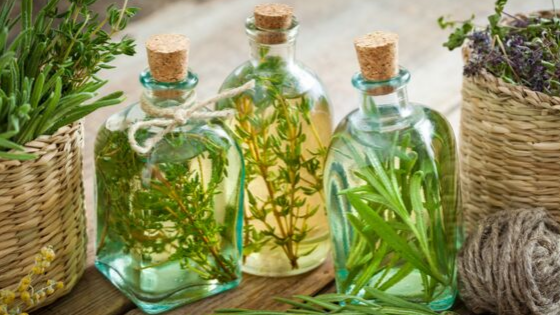
Herb-infused oils can be made through a variety of methods, including on the stove, in the crock-pot, and in the oven. The most common method is solar infusion, which we'll discuss today.
The instructions below are for a traditional solar-infused oil.
First, select the herbs you want to use. This is one application where you'll want to use dried herbs, as fresh herbs can cause the oil to go rancid. Make sure herbs and all tools are totally dry before proceeding.
Note- A single herb may be used or a blend. Sometimes herbalists choose to grind or mash herbs before infusing.
Next, fill a sterilized, dry mason jar 1/2 to 3/4 full with your desired herbs. Cover the herbs with oil and stir gently with a sterilized, dry spoon. Ensure the herbs are thoroughly coated with oil.
Note: There's no exact science to this. The amount you use will depend on the jar's size and the herb's size. You need to leave enough room so that if the herb expands, it won't overflow your jar! Keep an eye on your jar, as the herbs may expand and more oil may need to be added.
Then, tightly cover the jar and place it on a sunny & warm windowsill for 3-6 weeks.
Note: You don't want it getting direct sunlight, but you do want to make sure it's getting plenty of warmth from the sun. Check on occasion to make sure it's not going rancid, and stir or gently roll your jar every few days to help with the infusion. The final length of infusion is up to you; six weeks is most typical.
Last, strain herbs through cheesecloth. Gather together the cheesecloth to squeeze out as much oil as possible.
Note- A dash of vitamin E oil is often used as a natural preservative. Store in a cool, dry place.
Make sure any infused oils are within a year, and check regularly to make sure they're not going rancid.
How are herb-infused oils used?
An herbal oil can be used as a massage oil or in several other ways, such as:
- Homemade soap
- Bath oil
- Body scrub
- Lotion
- Facial treatment
- Hair treatment
- Joint pain treatment
- Sore muscle rub
- Headache application
- Stress relief oil
- Wound healing
- Ear infection and ear pain
These make a lovely addition to a home apothecary, in homemade body care products, or a fun, unique gift.